
Surgical · Autologous · Evidence evolving
Fat Grafting for Penis Enlargement
— is it still done?
Autologous fat grafting was one of the earliest surgical approaches to penile girth enhancement, and it largely fell out of favor due to unpredictable, often poor long-term results. That history is real and still relevant — but a newer technique published in 2026 suggests the picture may be changing. Here’s both sides, honestly.
The historical picture
Why traditional fat grafting largely fell out of favor
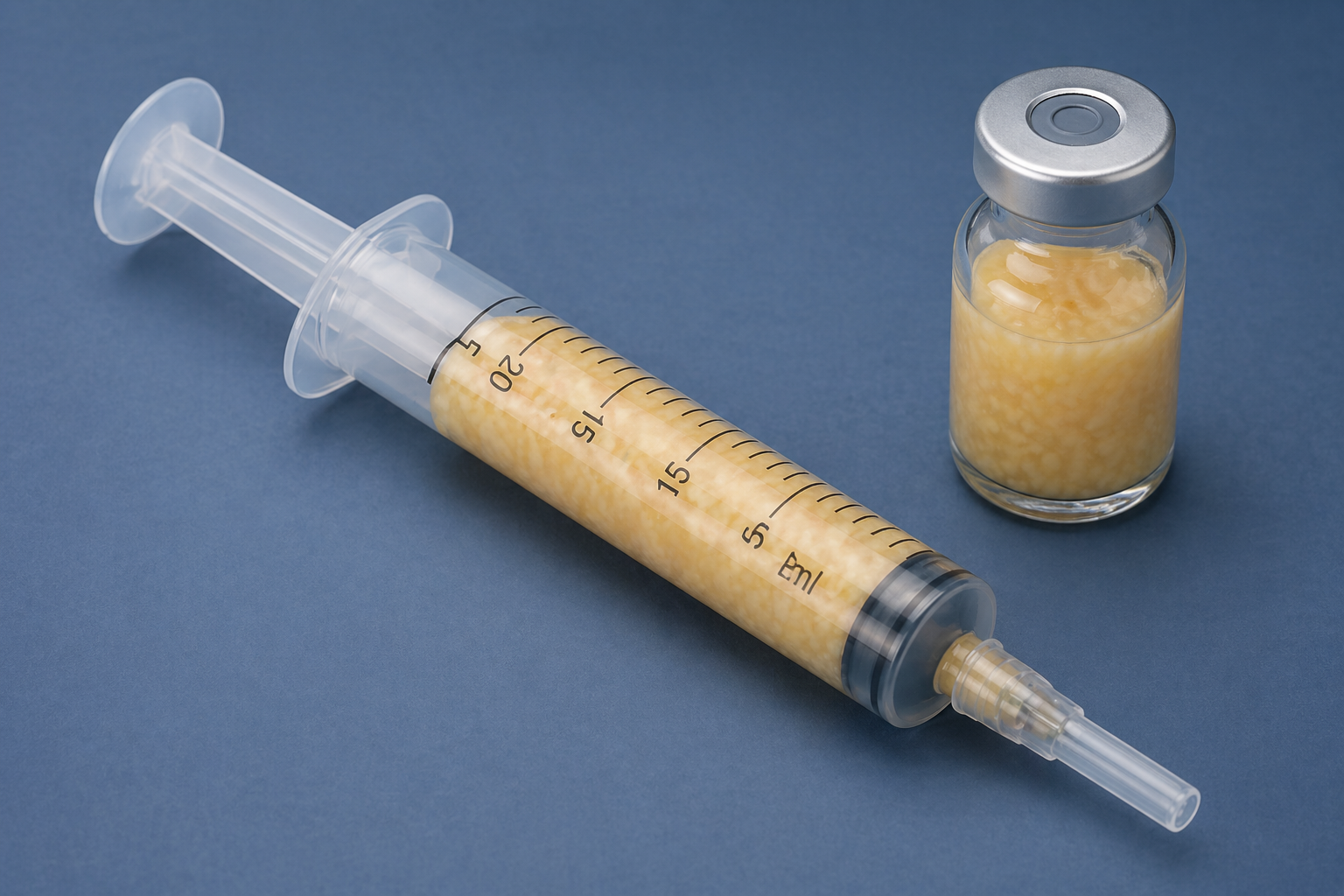
Fat grafting for penile girth involves harvesting fat via liposuction from another part of the body and injecting it beneath the penile skin. It was popularized in the 1990s and 2000s as one of the first available surgical girth options.
The core problem: transplanted fat cells need to establish a new blood supply to survive, and a substantial portion typically doesn’t. Reported resorption rates in the literature range widely, from 10% to as high as 90%, depending on the study and technique used — meaning outcomes have historically been genuinely unpredictable from patient to patient.
A published case series following 12 patients found cosmetic complications within one year — including irregular fat nodules, skin deformity, scarring, and “scrotalization” of the penile shaft skin (a specific deformity from concurrent ligament release procedures). A separate academic review went further, concluding these procedures should be considered investigational and that patients should be discouraged from pursuing them given unacceptably high complication rates and poorly defined outcome measures.
Fat survival after grafting depends heavily on technique — how the fat is harvested, processed, and injected — as well as individual biology. Historical studies used inconsistent methods and measurement protocols, making outcomes hard to compare or predict for any given patient.
Beyond volume loss, dead fat cells can trigger fat necrosis — a separate complication that can create hard nodules requiring corrective surgery to remove.
A genuinely new development
SVF-enriched fat grafting: better retention in a 2026 study
This is worth understanding on its own terms — it’s recent, it’s a real comparative study, and it may meaningfully change the calculus on whether fat grafting deserves reconsideration.
Stromal vascular fraction (SVF)-enriched fat outperformed conventional fat grafting
This retrospective, non-randomized comparative study enriched harvested fat with SVF — a component of fat tissue containing cells thought to promote angiogenesis (new blood vessel growth) and improve graft survival — and compared outcomes to conventional (Coleman technique) fat grafting.
The SVF group also showed improvement in erectile function among men with mild ED at baseline. Two patients in each group had minor wound infections — no major complications were reported in either group.
Important context: this is one retrospective, non-randomized study — a real and encouraging first step, but not yet the kind of large, independent, randomized trial that would settle whether this newer technique reliably solves the resorption problem that undermined fat grafting historically.
Documented complications
What’s been reported across the literature
Unpredictable, variable fat resorption — the primary historical limitation
Irregular fat nodules requiring corrective surgery
Skin deformity and visible contour irregularity
Scarring at both the harvest and injection sites
Fat necrosis — dead fat tissue that can require excision
Minor wound infections, reported even in the newer SVF-enriched studies
How it compares
Fat grafting vs. other girth options
| Feature | Fat Grafting (this page) | HA Fillers | P-Thick™ (DermaPRP) |
|---|---|---|---|
| Invasiveness | Surgical — liposuction required | Injection only | Injection only |
| Reversible? | No | Yes — hyaluronidase | No |
| Predictability of results | Historically low — variable resorption | High | Moderate |
| Material origin | Autologous — your own fat | Synthetic | Autologous — your own blood |
| Recovery | Longer — surgical harvest + injection sites | Minimal | Minimal |
| Evidence trend | Historically poor, newer technique improving | Established and growing | Early but growing |
Common questions
Frequently asked questions
Is fat grafting for penile girth still being performed?
Yes, though far less commonly than in the past, and mostly by specialists with specific experience in the technique. Its historical unpredictability pushed many providers toward HA fillers, P-Thick, or other regenerative options instead. The 2026 SVF-enriched study may renew interest, but it’s still an early, limited body of evidence.
What is SVF and why does it seem to help?
Stromal vascular fraction (SVF) is a component of fat tissue containing cells that promote new blood vessel formation and support tissue repair. Enriching the fat graft with SVF before injection appears to help the transplanted fat establish blood supply faster, potentially reducing the resorption that has historically undermined this procedure. This is based on one 2026 comparative study — promising, but not yet confirmed by independent, randomized research.
Can fat grafting results be corrected if they look uneven?
Correction typically requires additional surgery — there’s no dissolving enzyme the way there is for HA fillers. This is one reason provider experience and technique matter enormously with fat grafting specifically, and why some men who experience uneven resorption need a second procedure to address nodules or contour irregularity.
More predictable alternatives
Options with more established outcomes
Find a specialist experienced in fat grafting
This procedure requires specific surgical experience. Search our directory of vetted providers — or join the forum to hear from men who have explored surgical girth options.
Key sources: Ivanenko, Sforza et al., “Superior penile girth retention with stromal vascular fraction-enriched autologous fat grafting: a retrospective 1-year comparative study,” Translational Andrology and Urology (2026) · “Complication of Penile Injection of Autologous Fat,” Journal of Urology · “Penile Girth Enhancement with Autologous Fat Transfer” (academic review recommending caution)
This page is for informational purposes only and does not constitute medical advice, diagnosis, or treatment recommendations. Always consult a licensed physician before pursuing any surgical procedure. Historical outcomes for this technique have been highly variable; newer techniques are based on limited early evidence. PhallusMD does not endorse specific providers or guarantee clinical outcomes.
There are no reviews yet. Be the first one to write one.