
Energy-Based Treatment · Non-invasive · Most-studied non-surgical option
Shockwave Therapy
for erectile dysfunction
Low-intensity extracorporeal shockwave therapy (LiSWT) uses acoustic waves to stimulate new blood vessel formation and improve vascular health in penile tissue — the most clinically studied non-surgical ED treatment available, though major urology guidelines still disagree on how strongly to recommend it.
Shockwave therapy has real biological plausibility and real supporting trials — but it also has genuine, ongoing disagreement among professional guideline bodies about how ready it is for routine use. This page presents both sides honestly rather than picking the more flattering one.
Overview
What is shockwave therapy?
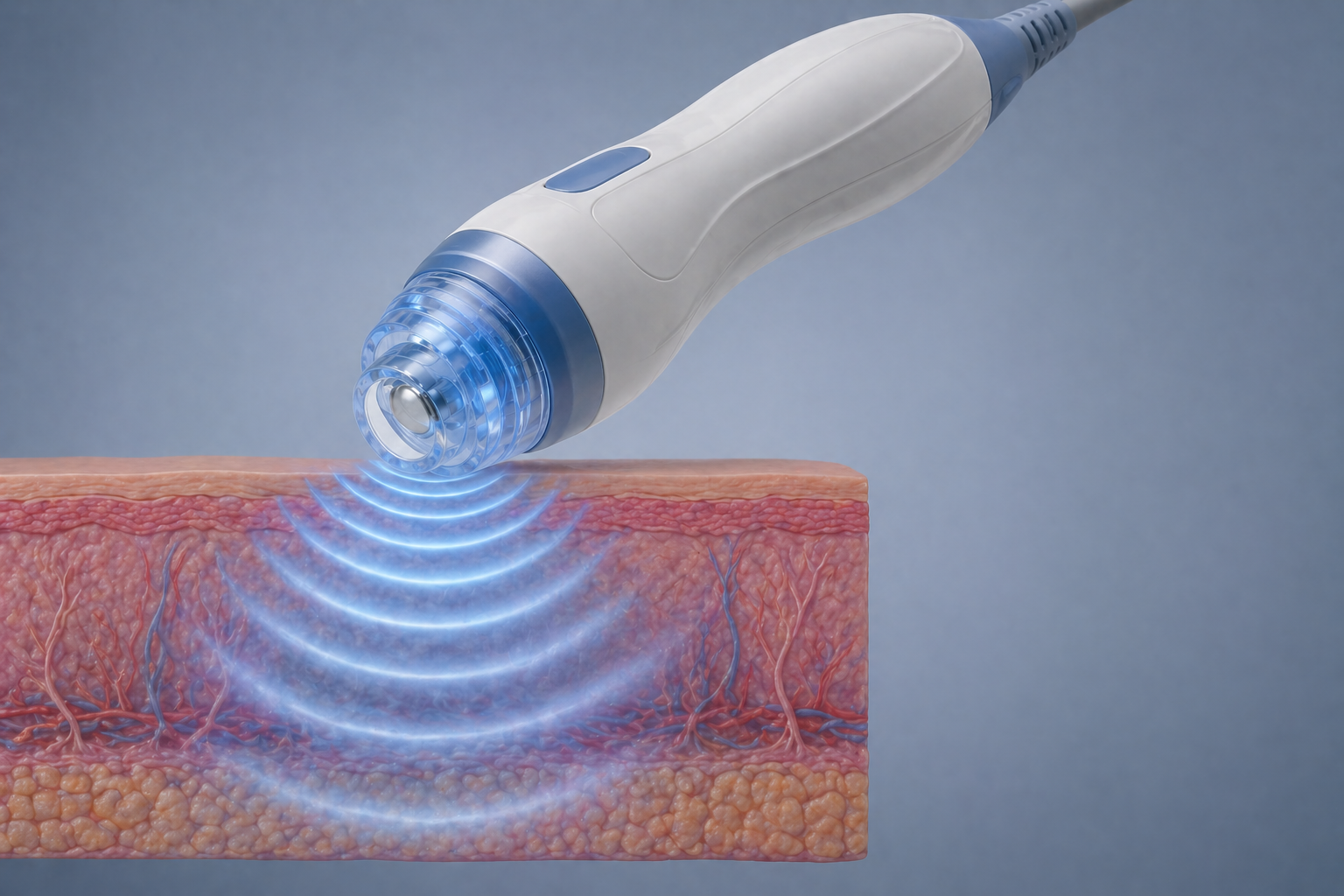
Low-intensity extracorporeal shockwave therapy (LiSWT) applies focused acoustic waves to penile tissue through the skin. The waves create controlled microtrauma believed to stimulate the body’s natural repair response — promoting new blood vessel formation (angiogenesis) and improving vascular health in the treated tissue.
Because vascular ED (reduced blood flow) is one of the most common underlying causes of erectile dysfunction, particularly as men age, treatments aimed at improving blood vessel health address a root cause rather than just managing symptoms on demand.
Shockwave therapy is non-invasive, requires no injections or anesthesia, and has no significant downtime — sessions are performed in-office and patients resume normal activity immediately afterward.
GAINSWave® is a branded marketing protocol for acoustic wave therapy — it uses standard shockwave technology. The brand name doesn’t refer to a unique device or mechanism. Treatment under the GAINSWave® name relies on the same underlying acoustic wave technology as other shockwave treatments.
What actually determines your results is device quality, protocol, and provider experience — not the brand name attached to the session.
Current evidence does not support shockwave therapy for reducing penile curvature in Peyronie’s disease, despite some marketing claims to the contrary. Be cautious of any provider claiming it treats curvature on its own.
Where guideline bodies actually stand
The EAU and AUA don’t fully agree — here’s both positions
This is the most important thing to understand before pursuing shockwave therapy. Two major professional guideline bodies have reviewed the same evidence and reached different conclusions about how ready this treatment is for routine clinical use.
Weak-strength recommendation, in favor
The EAU guideline lists LiSWT as an option for men with mild organic ED or those who respond poorly to PDE5 inhibitors. The EAU labels this specifically a “weak strength” recommendation — reflecting real but methodologically mixed supporting evidence, not a strong endorsement.
Investigational — Grade C evidence
The AUA’s 2018 ED Guideline states plainly: “For men with ED, low-intensity extracorporeal shock wave therapy should be considered investigational” — a Conditional Recommendation based on Grade C evidence. The AUA’s position is that, because the treatment is not FDA-approved for ED, it should generally be pursued within IRB-approved research protocols rather than as routine paid clinical care.
Both guideline bodies agree the treatment is safe and biologically plausible. They disagree on whether current evidence is strong enough to recommend it in routine practice versus reserving it for research settings. Recent (2025–2026) meta-analyses add an important nuance: while pooled data often show statistically significant improvement in erectile function scores, many individual trials fall short of the minimally clinically important difference (MCID) — meaning the improvement, while real, may be smaller than what a patient would actually notice.
None of this means shockwave therapy doesn’t work for some men — multiple sham-controlled trials do show real benefit, particularly for mild ED. It means you’re making this decision in an area where experts genuinely disagree, and you deserve to know that going in.
What to expect
The treatment protocol
Consultation and evaluation
Your provider evaluates your ED history, severity, and likely underlying cause to determine whether shockwave therapy is a reasonable option for your situation.
In-office sessions
Each session takes about 15–20 minutes. A handheld device delivers acoustic waves to several sites along the penile shaft. Most men describe the sensation as mild tapping, not painful.
Typical protocol
Most protocols involve 6–12 sessions over several weeks, commonly 2 sessions per week. Protocols vary meaningfully between providers and devices.
No downtime
Patients resume normal activity immediately after each session. There is no recovery period the way there is with injection-based or surgical treatments.
Most shockwave devices are FDA-cleared for musculoskeletal applications (such as plantar fasciitis or tendinopathy), but their use for erectile dysfunction is off-label in the US. Some devices have separate approvals outside the US specifically for ED. Off-label use is legal and common in medicine — but combined with the AUA’s investigational classification above, it’s worth understanding both facts together before proceeding.
Have a question about shockwave therapy?
Ask men who’ve been through it — real answers from the community.
How it compares
Shockwave vs. other non-surgical options
| Feature | Shockwave (LiSWT) | Apex RF™ | PRP (P-Shot®) |
|---|---|---|---|
| Mechanism | Acoustic wave — vascular repair | Radiofrequency — thermal remodeling | Growth factor delivery |
| Invasiveness | Non-invasive — no injections | Non-invasive — no injections | Injection-based |
| EAU guideline stance | Weak-strength, in favor | Not yet guideline-level | Not addressed by EAU for ED |
| AUA guideline stance | Investigational — Grade C | Not addressed | Experimental — Expert Opinion |
| Volume of published trials | Most of the three — 20+ RCTs | Limited | Very limited (2 trials per SMSNA, 2021) |
| Sessions required | 6–12 sessions | Protocol varies | 1–2 injections, periodic maintenance |
Common questions
Frequently asked questions
Is shockwave therapy FDA-approved for ED?
Most shockwave devices are FDA-cleared for musculoskeletal uses, but their use for erectile dysfunction is off-label in the US. The AUA’s 2018 guideline classifies shockwave therapy for ED as investigational, based on Grade C evidence, and recommends it generally be pursued within research protocols. The EAU, in contrast, includes it as a weak-strength option for select patients. Both positions are worth knowing before you decide.
How many sessions do I actually need?
Most protocols involve 6–12 sessions over several weeks, typically 2 sessions per week. Protocols vary meaningfully between providers and devices — there’s no single standardized regimen across the field, which is itself part of why guideline bodies remain cautious.
Does shockwave therapy work for Peyronie’s disease?
Current evidence does not support shockwave therapy for reducing penile curvature in Peyronie’s disease, despite some marketing claims to the contrary. Be cautious of any provider claiming it specifically treats curvature on its own — talk through realistic options with a urologist.
What is GAINSWave® and how is it different?
GAINSWave® is a branded marketing protocol for acoustic wave therapy — it uses standard shockwave technology, not a unique device or mechanism. What determines your actual results is device quality, protocol, and provider experience, not the brand name.
Can shockwave therapy replace ED medications?
Not necessarily — but for some men it may reduce reliance on medications over time. ED medications address symptoms temporarily; shockwave aims to address underlying vascular health. Some men use both — shockwave to work on root causes while continuing medication as needed during the treatment period.
Related treatments
Also worth exploring
Find a shockwave therapy provider
Search our directory of vetted physicians offering shockwave therapy — or join the forum to hear from men who have been through the treatment.
Want to go deeper?
Join the men already discussing shockwave therapy in the community forum. Ask anything — real conversation, real experience.
Join the discussion →🔒 Create a free anonymous account to post
Key sources: EAU Guidelines on Sexual and Reproductive Health — Management of Erectile Dysfunction · Erectile Dysfunction: AUA Guideline (2018) · “A close look at the evidence on low-intensity shockwave therapy in erectile dysfunction — a systematic review and meta-analysis,” Journal of Sexual Medicine (2026) · “Low-intensity shockwave therapy for erectile dysfunction,” Cochrane-format systematic review (2025)
This page is for informational purposes only and does not constitute medical advice, diagnosis, or treatment recommendations. Use of shockwave therapy for ED is off-label in the US and is classified as investigational by the AUA. Always consult a licensed physician before pursuing any treatment. Evidence assessments reflect published literature and guideline guidance as of 2026 and may change as new research emerges. PhallusMD does not endorse specific providers, devices, or brands including GAINSWave®.
There are no reviews yet. Be the first one to write one.