
Silicone and CMC Penile Fillers: What Men Need to Know Before Saying Yes
This article is for informational purposes only and does not constitute medical advice. Content reflects published literature and FDA guidance as of the date of publication. Always consult a licensed physician before pursuing any treatment.
Injectable fillers for penile enlargement are being marketed more aggressively than ever — and some of the substances being promoted deserve serious scrutiny. Dimethicone and carboxymethyl cellulose (CMC) have appeared in clinic advertising described as natural, minimally invasive, and in some cases FDA approved.
Men should know what the FDA actually says about this — and what the published medical literature says about complications from foreign-material penile injections.
What Are Dimethicone and CMC?
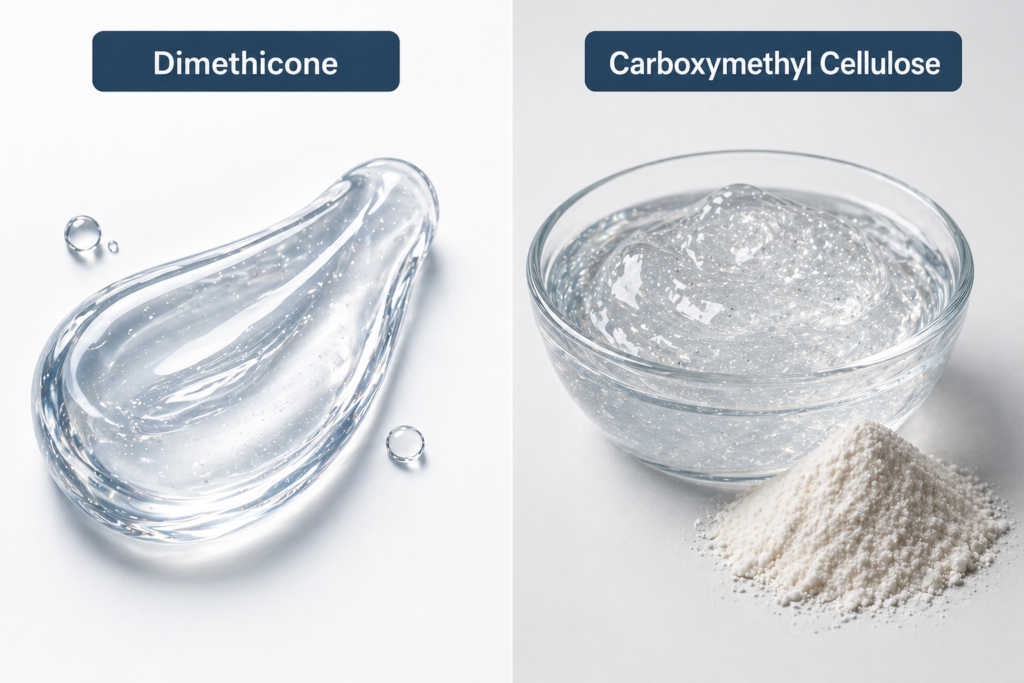
Widely used in skincare, cosmetics, and some medical applications. Familiar in legitimate products — but that familiarity is part of what makes its use in penile injection marketing potentially misleading.
A cellulose-derived thickening agent used in pharmaceuticals and cosmetics. Safe in those contexts — but approval in one context does not transfer to injected penile tissue.
A substance being safe in one context does not mean it is safe injected into penile tissue. The relevant questions are whether the specific product is approved for this specific use, whether it has been studied in this anatomical location, and what the complication profile looks like when things go wrong.
What the FDA Actually Says
The FDA has not approved any injectable filler specifically for penile enlargement. More specifically, the FDA states it has not approved liquid silicone or silicone gel for injection to augment tissues anywhere in the body.
FDA-approved dermal fillers are approved for specific facial areas and the hands — not for genital tissue.
When a clinic advertises a dimethicone-based penile filler as “FDA approved,” that claim deserves very careful scrutiny. Marketing often blurs three distinct things:
- An ingredient that exists somewhere in medicine
- A filler product cleared or approved for a different use
- A penile injection protocol being marketed by a clinic
These are not the same thing — and men deserve to know the difference.
The Complication Picture
The penis is a highly specialized structure — delicate skin, vascular tissue, nerves, lymphatic channels, and functional demands that no other body part shares. Injecting permanent or poorly characterized materials into this tissue can create problems that are genuinely difficult to fix.
Published medical literature on foreign-material penile injections describes: pain, swelling, lumps and hardening, infection, ulceration, granuloma formation, material migration, penile necrosis, lymphedema, cosmetic deformity, and the need for surgical removal or reconstruction.
The FDA specifically warns that unapproved fillers cannot have their safety and effectiveness assured — and that liquid silicone or silicone gel is not approved for injection to augment tissues anywhere in the body.
This does not mean every patient will experience a complication. It means men should be skeptical of marketing that presents these injections as routine, natural, or low-risk — because the published evidence does not support that framing.
Why “Natural Male Enhancement” Is Misleading Language
Calling an injectable filler “natural” is a marketing choice, not a medical characterization. A treatment is not natural simply because it is performed in an office, avoids a surgical incision, uses a familiar-sounding ingredient, or is administered by a physician.
Men should be especially alert when advertising combines several reassuring-sounding terms simultaneously — natural, permanent, scar-free, FDA approved, minimal downtime, biostimulatory, collagen-building. Each can sound credible in isolation. Together, they can obscure the most important question: approved for what, exactly, and with what evidence?
Questions to Ask Before Any Penile Filler
Not the ingredient list — the full branded or compounded product name. You should be able to look it up independently.
If the answer is anything other than a direct yes with verifiable documentation, that is your answer.
Permanent materials are significantly harder to manage when complications develop. Know what you are committing to before the procedure.
Most men do not think to ask this until there is a problem. Ask it first.
Not face filler studies. Not general body contouring literature. Data specifically in penile tissue.
An experienced, ethical provider should answer this directly and without hesitation.
Reconstruction after foreign-material penile complications is a subspecialty skill. Know before you start whether your provider can manage what might follow.
Red Flags in Advertising
Treat any of the following as a signal to slow down and ask harder questions:
- “FDA approved filler” without naming the specific product and its approved indication
- “Natural male enhancement” used to describe a synthetic injectable
- No explanation of reversibility or what happens if you want it removed
- No discussion of granulomas, migration, or potential deformity
- “Permanent results” framed as a benefit without acknowledging what permanent complications look like
- Before-and-after photos without long-term follow-up data
- Vague claims about collagen stimulation without published penile-specific data
If you have had a penile filler injection and are experiencing swelling, pain, lumps, skin discoloration, drainage, fever, or any changes in sensation or function — seek evaluation from a urologist or reconstructive surgeon promptly.
Do not wait for symptoms to resolve on their own, and do not return to the original provider as your only point of contact.
Dimethicone and CMC penile filler is not an FDA-approved penile enhancement treatment. Marketing it as “FDA approved” is potentially misleading. Safety in penile tissue is not established in a way that justifies the casual, consumer-style advertising some clinics are running.
The FDA has approved dermal fillers for certain facial uses and the hands. It has not approved liquid silicone or silicone gel for injection to augment tissues anywhere in the body — and it has not approved any filler for penile enlargement.
Men deserve full transparency, real published evidence, and honest discussion of risks before considering any injectable enlargement treatment. Vague marketing language and implied FDA approval are not enough.
Frequently Asked Questions
No. The FDA has not approved any injectable filler for penile enlargement. FDA-approved dermal fillers are approved for specific facial areas and the hands only.
No. An ingredient can be FDA approved for one use and not approved — or even prohibited — for another. The approval applies to specific products for specific indications, not to ingredients in general.
Published medical literature documents serious complications including granuloma formation, material migration, tissue necrosis, and the need for reconstructive surgery. The FDA has not approved liquid silicone or silicone gel for injection to augment tissues anywhere in the body.
No. Physicians can perform off-label procedures, but off-label does not mean proven safe or effective. The credential of the provider does not validate the treatment itself. Ask for published evidence regardless of who is performing the procedure.